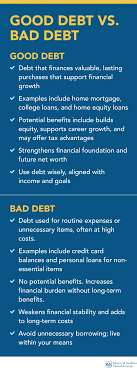
Introduction: When Debt Slowly Takes Over a Household
Debt rarely arrives all at once.
It usually enters a home quietly—one credit card swipe, one installment plan, one “we’ll figure it out later” decision at a time. At first, it feels manageable. Payments are small. Life continues. But over time, those small obligations begin to pile up, overlap, and compete with daily needs.
That’s when debt becomes bothersome.
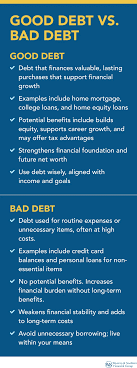
Not because debt is evil by nature, but because unmanaged debt slowly removes peace, flexibility, and security from a household. Financial stress seeps into conversations, decisions, and relationships. What was once a tool becomes a burden.
This article is written to help you understand how debt floods a home, why it happens so easily, and—most importantly—how to prevent it before it takes control.
No scare tactics. No unrealistic promises. Just practical guidance rooted in long-term thinking.
Understanding Debt Flooding: What It Really Means
Debt flooding is not just having debt.
It is the condition where:
- Monthly payments dominate income
- New debt is used to cover old debt
- Savings disappear
- Financial decisions are made under pressure
In a flooded home, money stops flowing with intention. It reacts instead of plans.
Preventing debt flooding means restoring control before the situation becomes overwhelming.
Why Debt Feels So Heavy at Home
Debt becomes emotionally heavy because it affects more than numbers.
It impacts:
- Daily choices
- Family conversations
- Sleep quality
- Long-term confidence
When debt grows faster than income, every expense feels like a threat. Even small emergencies can cause panic.
The goal is not to eliminate all debt instantly.
The goal is to stop debt from dominating the household.
How Debt Quietly Enters the Home
Most households don’t make reckless decisions. Debt often grows through reasonable choices made without a long-term view.
Common entry points include:
- Credit cards used for convenience
- Buy-now-pay-later offers
- Car loans stretched beyond comfort
- Personal loans for short-term relief
- Lifestyle upgrades without income growth
Individually, these choices seem harmless. Together, they create pressure.
The Illusion of “Affordable Monthly Payments”
One of the biggest traps in household debt is the focus on monthly payments.
A payment may look affordable on its own—but combined with others, it becomes dangerous.
Monthly affordability hides:
- Long loan terms
- High interest costs
- Reduced flexibility
A home floods not because of one large payment, but because of too many “small” ones.
The Role of Interest: The Silent Accelerator
Interest is what turns manageable debt into long-term burden.
High-interest debt:
- Slows progress
- Rewards minimum payments
- Extends repayment timelines
When interest works against a household, effort increases while results shrink.
Understanding interest is essential to stopping debt from growing.
Emotional Spending and Stress-Based Decisions
Many debt problems begin emotionally, not financially.
Common triggers:
- Stress
- Fatigue
- Social pressure
- Desire for comfort
Spending becomes a coping mechanism. Debt becomes the aftermath.
Preventing debt flooding requires awareness of why money is spent—not just how much.
Why Emergencies Make Debt Worse Without Preparation
Emergencies don’t cause debt flooding on their own.
Lack of preparation does.
Without an emergency fund:
- Credit cards become safety nets
- Loans replace savings
- Debt grows during vulnerable moments
Emergency planning is not optional—it is protection.
The Importance of Household Cash Flow Awareness
Many families don’t track cash flow clearly.
They know income and big bills—but not the full picture.
Preventing debt flooding starts with:
- Knowing where money goes
- Understanding fixed vs variable expenses
- Identifying leaks
Clarity reduces fear.
Awareness creates options.
Setting Boundaries Between Needs and Wants
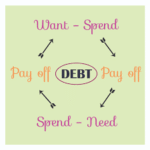
Debt floods homes when wants repeatedly disguise themselves as needs.
Needs:
- Housing
- Utilities
- Food
- Transportation
Wants:
- Upgrades
- Convenience spending
- Lifestyle inflation
Clear boundaries protect cash flow.
This does not mean deprivation. It means intentional choice.
Lifestyle Inflation: The Quiet Enemy of Stability
As income rises, expenses often rise faster.
This is lifestyle inflation.
Without discipline:
- Raises disappear
- Bonuses evaporate
- Debt remains constant
Preventing debt flooding means allowing income growth to strengthen stability—not just spending.
The Power of a Simple Household Budget
Budgets fail when they are complex and unrealistic.
Effective budgets are:
- Simple
- Flexible
- Honest
A budget is not a punishment.
It is a map.
It shows where you are and where adjustments are possible.
Creating a Debt-Safe Home Environment
A debt-safe home has:
- Clear spending rules
- Open communication
- Shared goals
This applies especially to families and couples.
Silence around money creates confusion.
Communication creates alignment.
Credit Cards: Tool or Trap?
Credit cards are not the enemy.
Misuse is.
Healthy credit card habits include:
- Paying balances in full
- Using cards for convenience, not survival
- Avoiding multiple balances
When credit cards fund lifestyle gaps, debt flooding begins.
Teaching Children Healthy Money Behavior
Debt prevention is generational.
Children observe:
- Spending habits
- Attitudes toward debt
- Emotional reactions to money
Teaching basic money principles early reduces future financial stress.
Good habits grow early.
Debt Consolidation: Help or Delay?
Debt consolidation can help—but only under the right conditions.
It works when:
- Interest rates are reduced
- Spending behavior changes
- A clear payoff plan exists
Without behavior change, consolidation simply rearranges debt.
The Danger of Using Debt to Maintain Appearances
Social pressure drives many poor financial decisions.
Keeping up appearances often leads to:
- Unnecessary upgrades
- Unplanned expenses
- Silent stress
A peaceful home values stability over image.
Financial strength is quiet.
Emergency Funds: The Strongest Debt Barrier
An emergency fund:
- Absorbs shocks
- Reduces credit reliance
- Restores confidence
Even a small fund changes decision-making.
It turns emergencies into inconveniences—not crises.
When to Seek Help Early
Debt becomes overwhelming when help is delayed.
Early support may include:
- Financial counseling
- Budget coaching
- Negotiating with creditors
Asking for help is not weakness.
It is leadership.
Avoiding Payday Loans and High-Cost Credit
Short-term, high-cost loans accelerate debt flooding.
They offer:
- Speed
- Convenience
But at the cost of:
- Extreme interest
- Repeating cycles
If a solution depends on borrowing again next month, it is not a solution.
The CEO Mindset: Running the Home Like a Business
Executives manage cash flow carefully.
Households should too.
This means:
- Planning ahead
- Keeping reserves
- Avoiding emotional decisions
- Reviewing performance regularly
A home is not a corporation—but it still needs structure.
Small Changes That Prevent Big Problems
Debt prevention does not require extreme action.
Small changes matter:
- Cancel unused subscriptions
- Delay non-essential purchases
- Pay extra on high-interest debt
- Review expenses monthly
Consistency beats intensity.
Rebuilding Peace After Debt Pressure
As debt pressure decreases:
- Stress reduces
- Choices expand
- Confidence returns
The goal is not perfection.
The goal is breathing room.
Long-Term Thinking Protects the Home
Short-term comfort often creates long-term pressure.
Long-term thinking asks:
- How does this affect next year?
- What happens if income changes?
Stability comes from patience.
Final Thoughts: A Calm Home Is a Financial Achievement
Debt can be very bothersome—but it is not unbeatable.
Debt floods homes when decisions lack structure, awareness, and communication. It retreats when clarity, discipline, and patience return.
Preventing debt flooding is not about saying no to everything.
It is about saying yes to:
- Stability
- Peace of mind
- Future options
A financially calm home is built slowly—but once built, it protects everything inside it.
Control your cash flow.
Respect your limits.
Plan before pressure arrives.
That is how you keep debt from taking over your home.
Debt problems exist all around the map and most families find themselves struggling over one thing or another at some point in time, it is a sad but very true problem going on in the world. Debt can be and is very bothersome, so for anyone out there who is finding a hard time getting out of the debt that you are in, please do continue reading this entire article, hopefully it will be more than helpful to you all.
Anytime that somebody offers a word of advice, you should always take the time out to listen up because you might just find that it is very helpful advice. There are many professionals available to anyone out there needing any sort of debt assistance, and by choosing to go with a professional you can be assured that you are going to be all set up and placed on the correct path for a successful financial future.
Debt problems will send you in a spiral of frustration, anxiety and even depression at times, so knowing what not to do with your money is really very important. Debt consolidation is always an option to help anyone who is in financial assistance and if you find yourself drowning in debt then perhaps you should definitely be considering some different options that could help to straighten you all out.
Consolidating your bills each month will make it possible for you to save yourself some money every chance that you get and by doing so you are always going to have a little bit of extra money in the bank each month that comes along. Your extra money can be put into some sort of stocks or cd’s, perhaps you could start seeing that you do know how to save more money each month, it might even be quite shocking to you at first.
Debt flooding within your home can be very exhausting for anyone responsible for trying to correct the current situation within the home. It can be extremely tiring and overwhelming just trying to find any sort of answer that could potentially help to get you through this horrifying time in your life. It is real important for you to pick up some helpful books regarding debt because if you do not do something now about this problem, things are going to become very bothersome and even more of a headache than ever before.
Your life does not have to be this way, making a few more intelligent decisions when it comes to your money each month, will truly provide you with the type of financial stability that you are looking for and have been looking for now for quite some time and have not yet been successful with any type of action. Get a friend that you can trust that might know a bit more about debt flooding and all of the problems that can come from having to deal with it. Good luck!

Tinggalkan Balasan